
SKC Blog - Composite vs. Natural Wood: The Honest Pros and Cons for Decking Materials in Nanaimo, BC
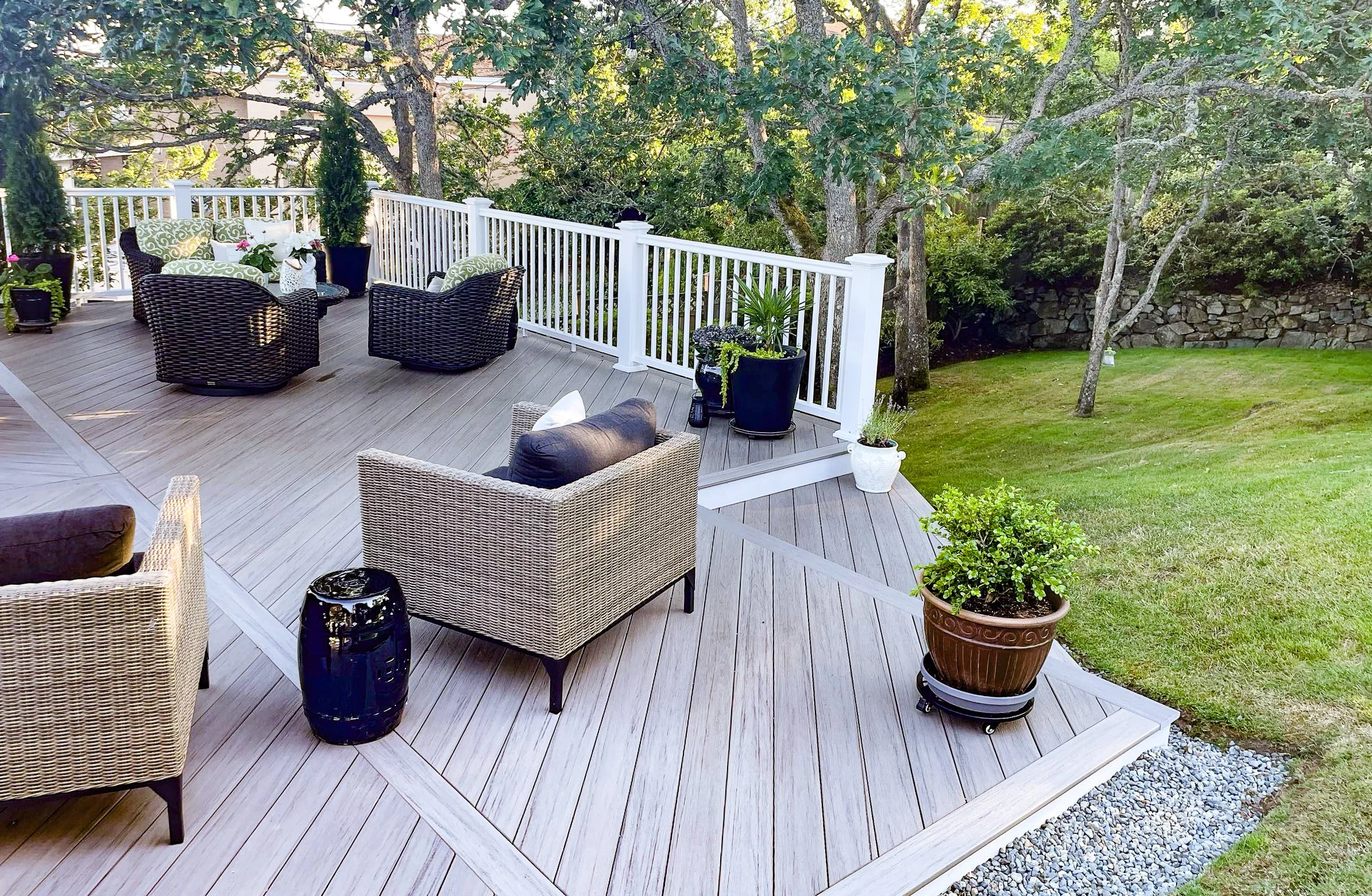
Nanaimo Composite Deck Project
Composite vs. Natural Wood: The Honest Pros and Cons for Decking Materials in Nanaimo, BC
If you’re planning a new deck or replacing an ageing one in Nanaimo, one of the first big decisions you’ll face is composite vs. natural wood decking.
On Vancouver Island, this choice matters even more. Between wet winters, coastal moisture, and UV exposure in the summer, your decking material needs to be able to handle a lot.
So, which one is actually better? The honest answer: it depends on how you live, your budget, and how much maintenance you’re willing to take on.
Let’s break it down.
Understanding the Difference
Natural wood decking (typically pressure-treated lumber or cedar) is a traditional, organic material known for its warmth and character.
Composite decking is a manufactured product made from a blend of recycled plastics and wood fibers, designed to mimic the look of wood with less upkeep. (Simcoe Decks)
Durability in Nanaimo’s Coastal Climate
This is where the biggest difference shows up.
COMPOSITE DECKING
Pros:
Highly resistant to moisture, rot, and insects (Deck Doctor)
Handles freeze-thaw cycles and damp conditions well (Simcoe Decks)
Won’t warp, crack, or splinter over time
Typical lifespan: 25–50 years (Composite Deck Direct)
Cons:
Can develop surface mold in shaded, damp areas if not cleaned (Deck Doctor)
NATURAL WOOD DECKING
Pros:
Strong and durable when properly maintained
Easier to repair board-by-board
Cons:
Vulnerable to rot, moisture damage, and insects
Can warp, crack, or splinter over time (Simcoe Decks)
Typical lifespan: 10–25 years depending on upkeep (Composite Deck Direct)
Local insight:
In Nanaimo’s damp climate, wood decks tend to age faster without consistent maintenance, especially in shaded or north-facing yards.
Maintenance: The Real Cost Over Time
COMPOSITE DECKING
Requires only occasional cleaning (soap and water) (Lowe's)
No staining, sanding, or sealing
Minimal annual effort
NATURAL WOOD DECKING
Needs staining or sealing every 1–3 years (Simcoe Decks)
Regular cleaning and inspections
Ongoing cost for products and/or labour
Honest takeaway:
Wood is cheaper upfront, but maintenance adds up quickly—both in time and money.
Appearance: Natural vs. Engineered
WOOD
Pros:
Authentic, natural grain and texture
Can be stained or customized to suit your style
Cons:
Fades, greys, and weathers over time
Requires ongoing refinishing to maintain appearance
COMPOSITE
Pros:
Consistent colour and finish year after year
Wide range of tones (modern greys, warm browns, etc.) (Simcoe Decks)
Cons:
May not fully replicate the look/feel of real wood up close (Deck Doctor)
Cost: Upfront vs. Long-Term
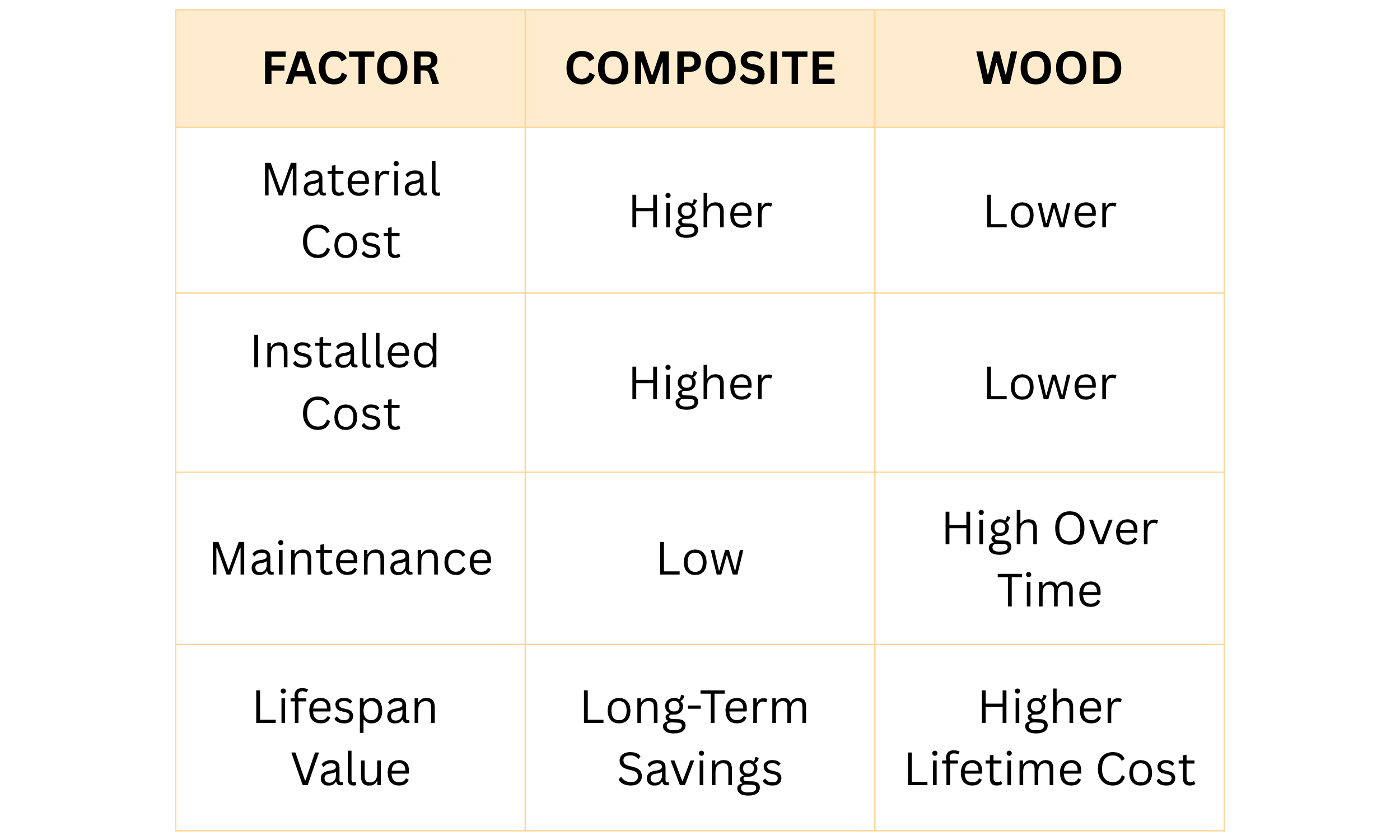
Cost Comparison Chart
Composite typically costs more upfront but can save money over 20+ years (Composite Deck Direct)
Wood is more affordable initially but often becomes more expensive over time due to upkeep
Comfort & Safety
COMPOSITE
No splinters
Slip-resistant options available
Can get hot in direct sun (Lowe's)
WOOD
Cooler underfoot
Can become slippery when wet
Splinters and raised nails can develop over time
Environmental Considerations
COMPOSITE: Often made from recycled materials, reducing waste
WOOD: Renewable resource, but requires harvesting and chemical treatments
So… Which Should You Choose?
Choose COMPOSITE If:
You want low maintenance
You plan to stay in your home long-term
Your deck is a primary living/entertaining space
You want consistent appearance year after year
Choose WOOD If:
You prefer a natural, authentic look
You’re comfortable with regular maintenance
You’re working within a tighter upfront budget
You don’t mind refinishing every few years
Final Thoughts for Nanaimo Homeowners
There’s no one-size-fits-all answer; but in Nanaimo’s wet, coastal climate, the decision often comes down to this:
COMPOSITE = convenience + long-term performance
WOOD = character + lower upfront cost (with ongoing effort)
If you’re someone who wants to enjoy your deck without constantly maintaining it, composite is usually the better investment.
If you love the process of maintaining and refreshing natural materials, wood can still be a beautiful and rewarding choice.